From pest to product: why culled crown-of-thorns starfish are a wasted resource
Tens of thousands of crown-of-thorns starfish are culled on the Great Barrier Reef every year and currently have no use. Here is why Leap Biotech sees them as a renewable source of valuable biomaterials.
Every day, teams of divers work on the Great Barrier Reef to find and cull crown-of-thorns starfish (COTS). Tens of thousands of starfish are removed every year. The work protects coral, but the starfish themselves are treated as waste.
At Leap Biotech we think that is a missed opportunity.
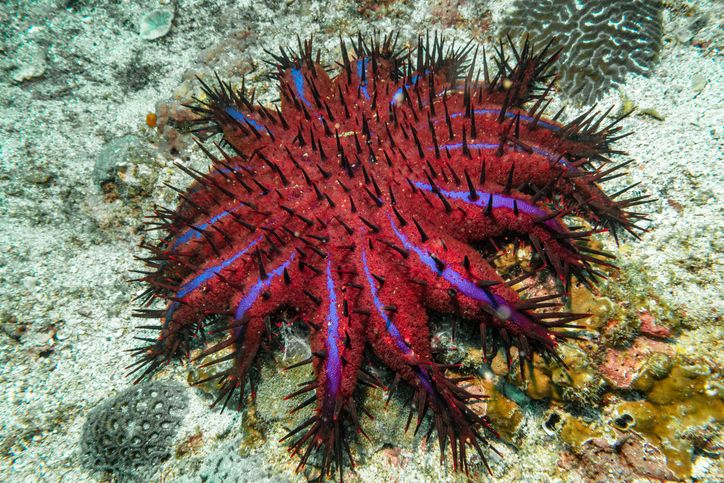
Why crown-of-thorns starfish are culled
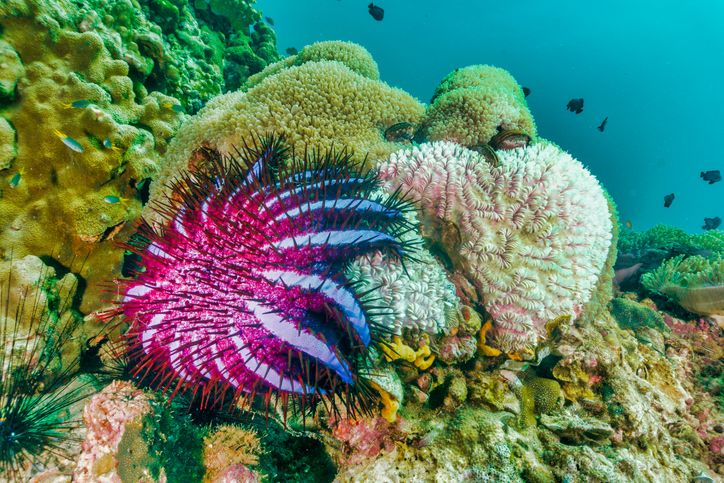
Crown-of-thorns starfish are native coral predators. At normal numbers they are part of a healthy reef, but during outbreaks they can kill up to 90 per cent of the coral on affected reefs. A single adult can eat up to 10 square metres of coral a year, and a large female can release over 200 million eggs a year. Between 1985 and 2012, crown-of-thorns starfish caused 42 per cent of all coral loss on the Great Barrier Reef.
Because outbreaks spread so fast, reef managers use targeted culling to protect high-value reefs. The Great Barrier Reef Foundation's control program has a budget of A$57.8 million.
The biology that makes COTS hard to control
Crown-of-thorns starfish are hard to control for three reasons. They breed in huge numbers, they can regenerate damaged tissue and the population can rebuild quickly after culling, and they are spread across thousands of reefs.
Those same traits make them interesting as a raw material. A species that grows and regenerates this quickly is, in effect, a renewable resource that nobody has to farm.
Why biomaterials?
Starfish bodies contain valuable biomaterials. The best known is collagen, the protein that gives skin, tendons and connective tissue their strength. Collagen is one of the most widely used biomaterials in the world, in products ranging from skincare to cell-culture research.
Most commercial collagen comes from mixed meat-industry waste such as cattle hides and pig skin. That supply chain has well-known problems: inconsistent quality, variation from batch to batch, risks of disease and contamination, and dependence on the meat industry.
Crown-of-thorns starfish offer something different: a single-origin source that is already being removed from the reef for conservation reasons.
What Leap Biotech does
We have developed a proprietary process to turn crown-of-thorns starfish into valuable biomaterials. The first is full-length atelocollagen. Atelocollagen is collagen with its telopeptide ends removed, which makes it suitable for premium cosmetics and biomedical uses.
Our process is technically validated, and we are developing further biomaterial products for skincare and cell culture.
A circular model for reef protection
Our business model follows four steps: collect culled starfish, process them, standardise the biomaterials, and sell ingredients and finished products. Each step adds value to a resource that currently has none. Reef protection gains a commercial return, industry gets consistent, traceable materials and local communities get employment and new economic opportunities, creating a circular economy.
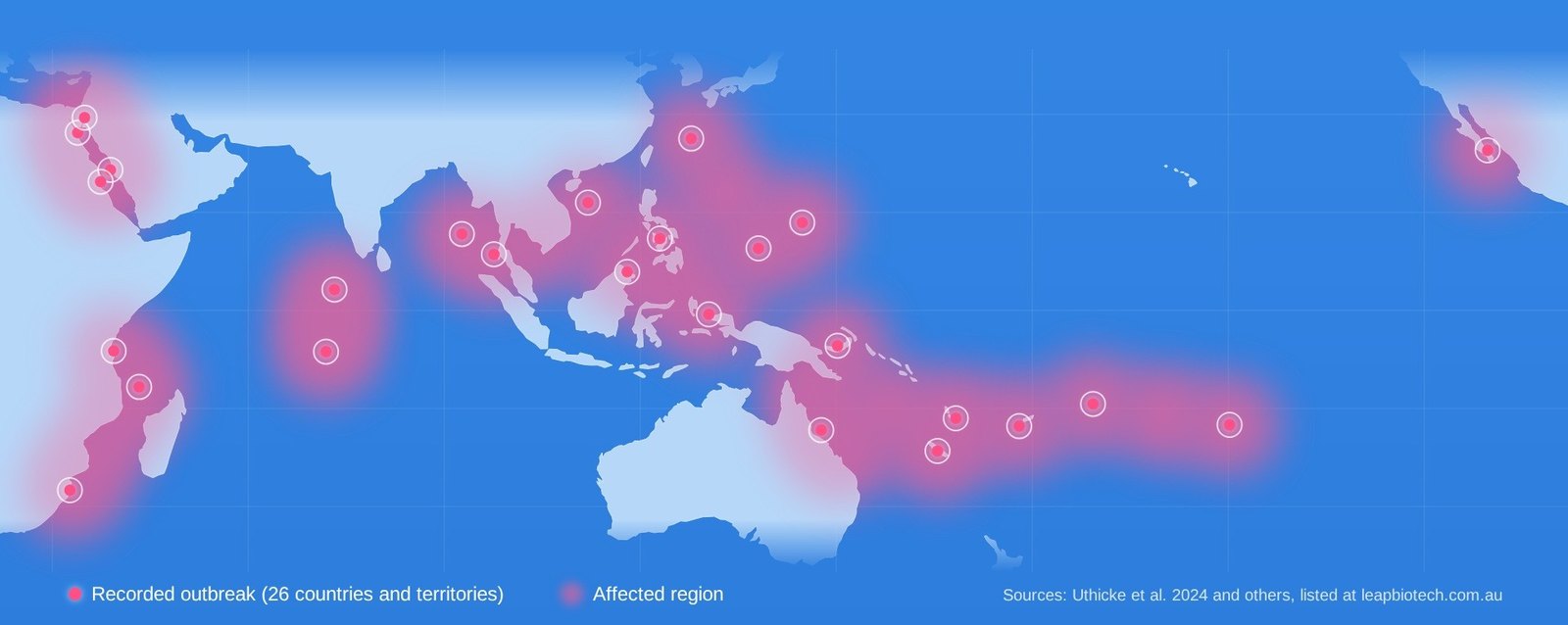
This does not replace reef-control programs. It adds a commercial reason to support them, and it is a model that can be repeated in the at least 25 other countries and territories where crown-of-thorns starfish outbreaks have been recorded, from the Red Sea to Mexico. See our sourced list of outbreaks by country.
Learn more about crown-of-thorns starfish or see our product pipeline.